
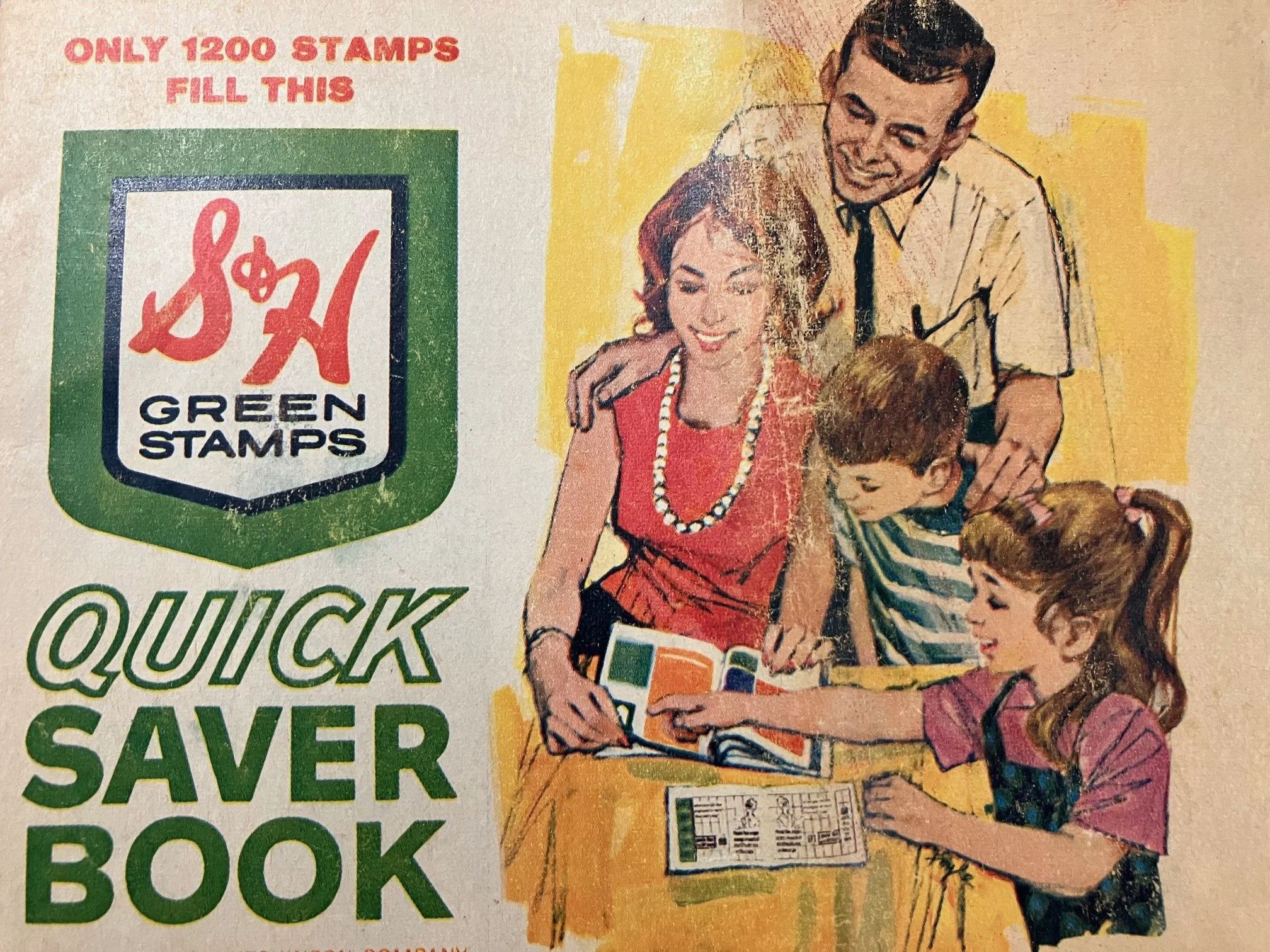
Found in a box of debris from my past, amongst ticket stubs, birthday cards, and embarrassing pictures.
My purpose in life always has been to avoid work. And I hear these people saying, "I work hard and I pay my taxes." Well, you're an asshole.
― Malachy McCourt
Ma kept a little blue notebook.
It looked like one of those examination books you got in college: blue cover, lined pages. The kind meant to keep you honest. We called it, with our usual flair for language, the Blue Book.
The color didn’t matter. What mattered was what she wrote in it.
The Blue Book contained the name of every child who owed her money, the date the loan was issued, and how much, if any, had been paid back. This was not play money. This was a Ledger of Legal Tender.
You became eligible for a loan from the Bank of Rita once you had a steady income. For the Coughlin kids, that usually happened around age thirteen or fourteen, thanks to the blatant nepotism practiced at the Yum Yum Shop, where Ma was the manager.
The Blue Book wasn’t just record-keeping; it was instruction. You could borrow, but you absolutely had to pay it back. On time. All codified, handwritten in the Blue Book. No computers. No spreadsheets. She did the heavy lifting herself. The same way she balanced her checkbook and kept her budget. By hand. She was thrifty.
Ma was thrifty in the way people are thrifty when they’ve had to be.
She was always looking for ways to save a few pennies, and one of her favorite methods was collecting Green Stamps.
Green Stamps were the forerunner of today’s rewards programs. Stores bought stamps from the S&H company and handed them out based on how much you spent (one stamp for every ten cents, or something like that). Grocery stores, gas stations, department stores, everyone participated.
But in my memory, Green Stamps came almost exclusively from the First National Supermarket.
This was because Ma shopped there constantly. The First National was directly across the street from our house and sat squarely on her walk home from the bakery. She bought only what she needed, when she needed it, which meant she was there nearly every day.
The stamps accumulated slowly. Painfully slowly.
She pasted them into special books, methodically, one after another. Sometimes the girls helped her paste. Dotti, for reasons no one ever fully understood, liked the taste of the stamps.
Eventually, you could redeem the filled books at a Green Stamp redemption center. Free stuff, for stuff you were buying anyway. This concept thrilled me.
I was forever pestering Ma about when we could go to the redemption store. I imagined bicycles. Toys. Miracles. The catalog alone was enough to overwhelm me.
What I did not understand was the cruelty of scale. You needed a boatload of Green Stamps to get anything. Stacks and stacks of books. Another thing I didn’t understand was that I wasn’t getting anything at all.
Ma had already chosen.
She had her eye on a Panasonic clock radio for her bedroom.
It was one of the new “digital” models, though not digital in the way we think of them now. Instead of glowing numbers, it had small plastic cards that physically flipped every minute and hour. It looked futuristic. Mechanical. Grown up. Serious.
Initially, it was very satisfying to watch the numbers flip.
Until they didn’t.
Or when only some of them did.
After waiting what felt like years, pasting stamp after stamp into book after book, Ma’s prize failed after only a couple of months. The numbers jammed. Time itself appeared confused.
You know the saying, “the best things in life are free”?
It does not apply to items acquired with Green Stamps.
But even now, decades later, I can still see that clock. And I can still see Ma, accepting its failure without drama, already moving on to the next thing that needed doing.
At least the radio still worked.